
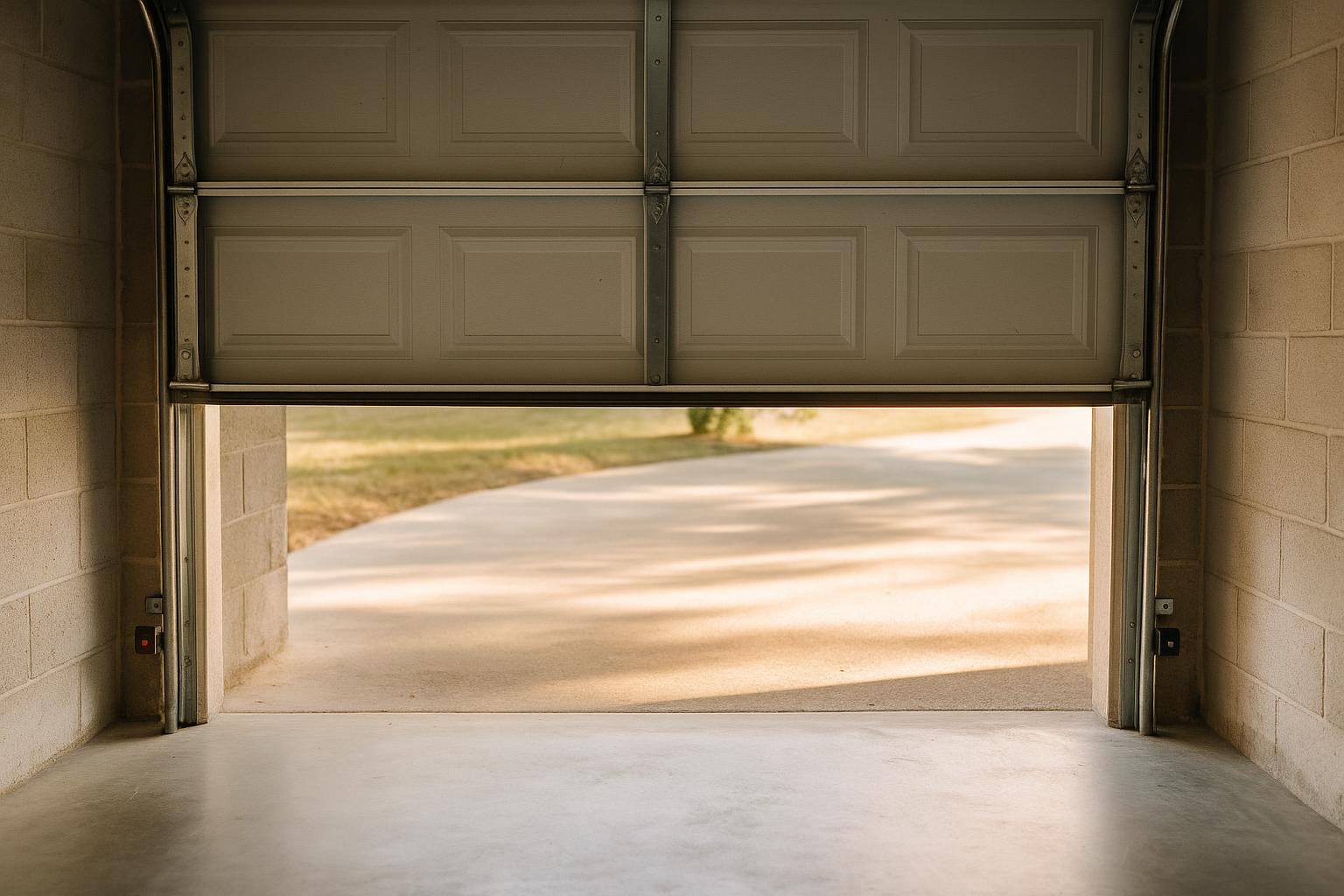
That Frustrating Reverse: When Your Garage Door Won't Stay Closed
You press the button on your remote, the garage door starts its descent, and then — right before it reaches the floor — it reverses and goes back up. You try again. Same thing. Maybe it works on the third attempt, maybe it doesn't. Either way, you're standing in your driveway in the Lehigh Acres heat wondering what went wrong.
This is one of the most common garage door problems we get calls about, and the good news is that it's usually fixable without replacing the entire system. The bad news is that ignoring it can lead to bigger issues down the road — or leave your garage wide open and vulnerable overnight.
Let's walk through the most likely causes and what you can do about each one.
1. Misaligned Safety Sensors
This is the number one reason garage doors reverse before closing, and it's often the simplest to fix. Every garage door opener manufactured after 1993 is required to have photo-eye safety sensors installed near the bottom of the door tracks, about six inches off the ground. These sensors shoot an invisible infrared beam across the opening. If anything breaks that beam — a bike, a trash can, a leaf, or even a spiderweb — the opener interprets it as an obstruction and reverses the door to prevent injury.
Here's what to check:
- Alignment: Look at both sensors. Most models have a small LED light on each unit. If one is blinking or off, the sensors are likely misaligned. Gently adjust the sensor until the light becomes steady.
- Obstructions: Clear away any objects, cobwebs, or debris between the two sensors.
- Dirty lenses: Wipe the sensor lenses with a soft cloth. Dust, dirt, and moisture from Florida's humid climate can cloud them over time.
- Loose brackets: The sensor brackets can shift from vibration or accidental bumps. Tighten the mounting hardware and re-check alignment.
If the sensor lights are steady and the path is clear but the door still reverses, the problem likely lies elsewhere.
2. Incorrect Close-Limit Settings
Your garage door opener has close-limit settings that tell the motor exactly how far the door should travel before it's considered fully closed. If these settings are off — even by a small margin — the opener may think the door has hit something when it reaches the floor, triggering the auto-reverse safety feature.
This commonly happens after a new opener installation, a spring replacement, or even seasonal temperature changes that cause metal tracks and hardware to expand or contract. In Lehigh Acres, where summer temperatures regularly push into the 90s, thermal expansion is a real factor that many homeowners don't consider.
Adjusting close-limit settings involves turning small screws or dials on the opener unit itself. Your owner's manual will have specific instructions for your model. However, if you're not comfortable making these adjustments, it's worth calling a professional. Setting the limits too aggressively can cause the door to slam into the ground with excessive force, which damages the bottom seal, the tracks, and the opener mechanism over time.
3. Worn or Damaged Rollers and Tracks
As your garage door travels up and down, the rollers glide along metal tracks on either side. When rollers wear out, crack, or become caked with grime, they create resistance. Bent or misaligned tracks do the same thing. If the opener encounters enough resistance during the closing cycle, it may interpret that friction as an obstruction and reverse.
Signs of roller and track problems include:
- Grinding, squealing, or scraping noises during operation
- The door moving unevenly or jerking as it travels
- Visible damage, rust, or debris in the tracks
- Rollers that wobble or don't spin freely
Nylon rollers tend to last longer and operate more quietly than steel rollers, especially in the salt-air environment that affects homes closer to the coast in Fort Myers, Cape Coral, and Bonita Springs. Replacing worn rollers is a relatively affordable repair that can make a dramatic difference in how smoothly your door operates.
4. Broken or Weakening Springs
Garage door springs bear the majority of the door's weight. When a spring starts to weaken or partially break, the opener has to work much harder to move the door. This extra strain can trigger the auto-reverse mechanism, particularly during the closing cycle when gravity is already pulling the door down faster than the weakened spring system can control.
If your door feels noticeably heavier when you try to lift it manually, or if you've heard a loud bang from the garage recently, a broken spring is the likely culprit. Spring replacement is not a DIY job. These components are under extreme tension and can cause serious injury if handled improperly. This is one repair where calling a trained technician is always the right move.
5. Issues with the Opener's Force Settings
In addition to close-limit settings, most garage door openers also have force settings that control how much power the motor uses to move the door. If the downward force is set too low, the opener may not have enough power to push through even normal resistance — the weight of the door, slight friction in the tracks, or a tight weatherseal — and it reverses instead.
Like the limit adjustments, force settings are typically controlled by screws or dials on the opener unit. Increase the down-force setting in small increments and test the door after each adjustment. Be cautious not to set it too high, as this can override the safety reverse feature and create a hazard.
6. Wiring or Electrical Problems
Less common but still worth mentioning: damaged wiring between the opener and the safety sensors can cause intermittent reversing issues. Rodents, moisture, and general wear can degrade wires over time. If you've checked everything else and the problem persists, a wiring issue may be the hidden cause. A professional can test the electrical connections and replace any compromised wiring quickly.
When to Call a Professional
Some of these fixes — cleaning sensors, clearing obstructions, tightening brackets — are well within the ability of most homeowners. But if you've gone through the basics and your garage door is still reversing, or if the issue involves springs, force adjustments, or electrical components, it's time to bring in help.
At Lehigh Acres Garage Door, we diagnose reversing issues every week. Most of the time, we can identify and resolve the problem in a single visit. We serve homeowners throughout Lehigh Acres, Fort Myers, Cape Coral, Estero, Bonita Springs, and San Carlos Park with honest pricing and no pressure to replace parts you don't need.
Don't Leave Your Garage Open to Chance
A garage door that won't close properly isn't just an inconvenience — it's a security risk and an invitation for pests, rain, and humidity to damage everything stored inside. If your door keeps reversing and you can't pinpoint the cause, give us a call. We'll get it closing properly so you can get back to your day without the guessing game.